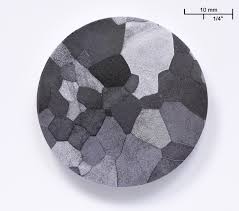
V
V
Vanadium is a typical "strategic by-product metal," with over 95% of vanadium production not coming from independent vanadium mines, but rather being recovered as a high-value byproduct from the smelting processes of other primary metals. Its industrial chain is closely tied to the steel and titanium industries.
1. Vanadium-titanium magnetite:
Vanadium-titanium magnetite is the world's most important vanadium resource (accounting for approximately 85% of total resources). It is a special type of magnetite primarily composed of iron, titanium, and vanadium. Vanadium occurs isomorphously in the crystal lattice of ferromagnetite or ilmenite. It is mainly produced in the Panzhihua-Xichang region of China, Russia, South Africa, and New Zealand. The primary targets for mining are iron and titanium. Vanadium is enriched during the iron and steel smelting process: after the ore is smelted in a blast furnace or electric furnace, vanadium is concentrated in the vanadium slag, which becomes the primary raw material for vanadium extraction. This is the main route for vanadium production in China and Russia.
2. Vanadium-bearing coal/carbonaceous shale:
Vanadium-bearing coal/carbonaceous shale is a special vanadium resource found in sedimentary rocks. Vanadium exists in an adsorbed state or isomorphously within clay minerals such as illite, often associated with uranium, molybdenum, and nickel. It is typically low-grade but has enormous reserves. Vanadium can be directly extracted through specialized processes such as sodium roasting-water leaching, making it an important and supplementary source of vanadium in China's supply, but this process incurs high environmental costs.
3. Other vanadium-containing raw materials:
Vanadium is present in some crude oil and oil sands, and is ultimately enriched in fly ash after combustion or spent catalysts from oil refining, which can serve as a source for recovery. Some deposits contain small amounts of vanadium, which are recovered during the extraction of the main metal.
 中文
中文  English
  Español
  Português