Nb
Nb
1. Niobium ore:
Niobium-bearing ores in nature primarily contain niobium as their main chemical element. The most important mineral is columbite, with the chemical formula (Fe,Mn)(Nb,Ta)₂O₆, which occurs in association with tantalum minerals. Another important ore is pyrochlore. It is often associated with rare earth elements, thorium, uranium, titanium, and other elements. It is the initial raw material for the niobium industry and requires beneficiation, enrichment, and chemical separation to obtain niobium compounds.
2. Niobium concentrate:
The product obtained from niobium ore after beneficiation, enrichment, and separation mainly consists of niobium oxide (Nb₂O₅). Depending on the type of raw ore, it can be divided into niobium-iron ore concentrate and pyrochlore concentrate. It is the core raw material for niobium smelting, primarily used to produce niobium-iron ore through aluminothermic or carbothermic reduction processes, or for the production of chemical-grade niobium oxide.
3. Electrolytic niobium:
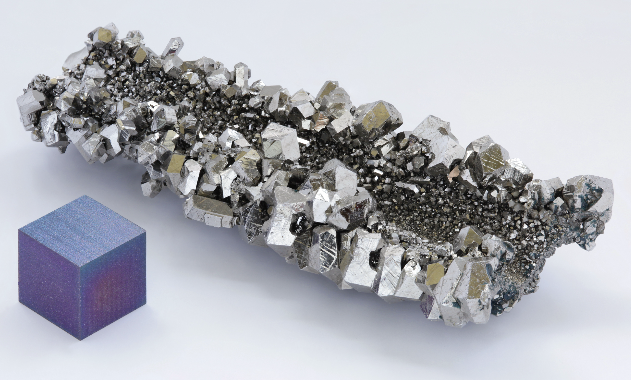
Metallic niobium, purified from niobium oxide or niobium halides via molten salt electrolysis, can achieve a purity of over 99.8%. Its production scale is far smaller than that of electrolytic tantalum, and it is mainly used in specialized fields requiring ultra-high purity, such as the preparation of superconducting materials (e.g., niobium-titanium alloys, niobium-tin alloys), nuclear industry materials, and high-end physics research equipment.
4. Niobium waste:
Niobium-containing waste materials mainly originate from superalloys (such as aerospace engine components), ferro-niobium alloys (steelmaking additives), and processing waste from niobium-titanium superconducting wires. It is a highly efficient renewable resource; through recycling, smelting, or chemical treatment, it can be directly used in steel metallurgy or reprocessed into niobium chemicals, making it crucial for resource recycling.
 中文
中文  English
  Español
  Português