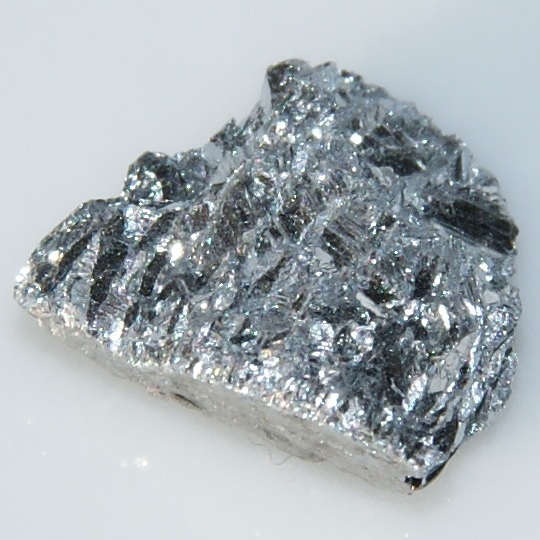
Sb
Sb
1. Stibnite:
Stibnite is the most important and typical antimony ore. It is typically lead-gray in color, with a bright metallic luster and distinct columnar or acicular crystals; its streak is grayish-black. It has very low hardness and can be scratched with a fingernail. It is often found in association with minerals such as cinnabar (HgS), pyrite, and quartz. Most of the world's primary antimony resources originate from this mineral.
2. Antimony oxide:
Sb₂O₃ is a secondary weathering product of stibnite in the surface oxidation zone. It is white, pale yellow, or pale gray, and often occurs as earthy, powdery, or flaky aggregates. It can be smelted directly as an oxide of antimony, but its more common value lies in its role as a prospecting indicator, suggesting the possible presence of primary stibnite bodies underground.
3. Yellow Antimony Flower:
Yellow antimony oxide (Sb₂O₄·nH₂O or Sb₃O₆(OH)) is commonly found in the oxidation zone and is another product of stibnite oxidation. It is light yellow or ochre yellow in color and mostly appears as earthy, stalactitic, or crust-like forms.
4. Antimony-containing sulfur salt minerals:
Antimony is found in various minerals, including thallium stibnite, brittle stibnite, and tetrahedrite. Its composition is complex, with antimony forming the mineral lattice alongside metals such as copper, lead, and silver. It is commonly found in polymetallic deposits. Antimony is typically not a primary product but rather an important associated valuable element, recovered during the beneficiation of lead, copper, and silver, thus serving as a significant supplementary source of antimony resources.
 中文
中文  English
  Español
  Português