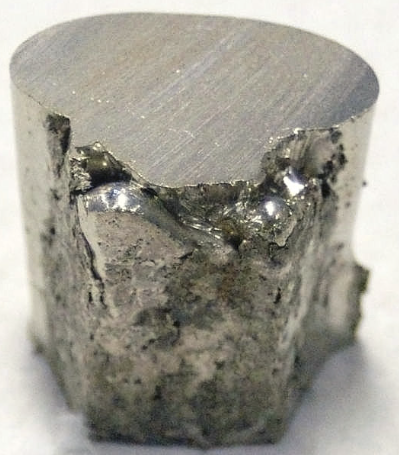
Ni
Ni
1、Nickel Ore
Ores containing nickel, commonly including pentlandite and millerite, serving as important mineral resources for nickel extraction. Nickel’s good high-temperature resistance, corrosion resistance, and magnetic properties make it widely used in stainless steel production to enhance corrosion resistance and in the battery sector for manufacturing nickel-metal hydride and nickel-cadmium batteries.
2. Nickel ore:
Nickel-bearing ores or weathered clays in nature mainly consist of lateritic nickel ore (containing oxides/silicates of nickel, iron, and magnesium) and nickel sulfide ores (such as pyrite), often accompanied by elements such as cobalt, iron, and copper. It is the initial raw material for the nickel industry and requires beneficiation or direct smelting to provide the foundation for subsequent nickel extraction.
3. Nickel concentrate:
Nickel concentrate is the product of nickel ore after crushing and beneficiation (such as flotation), with a significantly increased nickel content (usually above 5% to 15%), while also containing elements such as sulfur, iron, and cobalt. It is the main raw material for nickel smelting and can be further processed into nickel matte, ferronickel, or electrolytic nickel through pyrometallurgical or hydrometallurgical processes.
4、镍合金:
镍合金是以镍为基础,加入铬、铁、钼、铜等元素形成的合金材料,如因科镍、蒙乃尔等。其具备耐高温、耐腐蚀及特殊电磁性能,并非天然矿石,而是通过精密熔炼配制而成,广泛用于航空航天、化工、医疗及能源装备等高端领域。
5. Nickel ingots:
Nickel ingots are crude nickel or conventional nickel metal obtained from nickel concentrate or recycled nickel materials through primary smelting (such as electric furnaces or converters). Their purity is generally between 97% and 99.5%, and they contain impurities such as cobalt, iron, and sulfur. They are an intermediate or commercial product of nickel smelting and can be used for casting, alloy preparation, or further refining and purification.
6. Nickel scrap:
Nickel scrap refers to scrap metal or industrial waste containing nickel, primarily derived from stainless steel, nickel alloys, batteries, and electroplating residues. It exhibits diverse nickel content and forms. As an important recycled nickel resource, its recycling and reuse can significantly reduce energy consumption and costs in primary nickel production, serving as a crucial supplement to the sustainable supply of nickel resources.
 中文
中文  English
  Español
  Português