W
W
1. Tungsten ore:
Tungsten-bearing ores in nature contain tungsten as their main chemical element. Common examples include wolframite ((Fe,Mn)WO₄) and scheelite (CaWO₄), often accompanied by molybdenum, tin, bismuth, copper, lead, zinc, and other elements. It serves as the initial raw material for the tungsten industry, providing the foundation for subsequent tungsten extraction and smelting through mining and beneficiation processes.
2. Tungsten concentrate:
Tungsten ore is enriched through beneficiation processes such as crushing, gravity separation, flotation, and magnetic separation. The main component of the product is tungsten oxide (WO₃). It is a key raw material for tungsten smelting and can be directly used to produce ferrotungsten, ammonium paratungstate (APT), or tungsten oxide.
3. Ferrotungsten:
Ferrotungsten alloy, obtained by smelting tungsten concentrate in an electric furnace via carbothermic or silicothermic reduction, typically contains 70%-85% tungsten, along with iron and small amounts of impurities. It is a major intermediate alloy product of tungsten and is directly used as an alloying additive in steelmaking to improve the hardness, wear resistance, and high-temperature performance of steel.
4. Tungsten powder:
Tungsten powder is produced by hydrogen reduction of high-purity ammonium paratungstate (APT) or tungsten oxide. The purity is typically higher than 99.9%, and the particle size can be controlled from micrometers to nanometers. It is the basic raw material for all tungsten processing and is used to produce cemented carbide, high-density alloys, tungsten materials, and tungsten products.
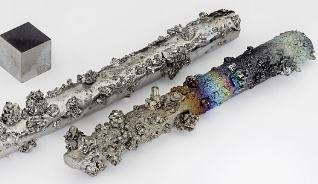
5. Tungsten bars:
Tungsten powder is pressed and sintered at high temperatures (or melted) to produce strips or rods of tungsten metal billets. These billets have high density and a compact grain structure. This is the primary processing form of tungsten, which needs to be further processed into wires, rods, sheets, and other tungsten materials through forging, rolling, drawing, and other processes. These materials are widely used in electric light sources, electronics, military applications, and high-temperature components.
6. Tungsten waste:
Tungsten-containing waste cemented carbide, tungsten materials, and processing residues mainly originate from cutting tools, wear-resistant parts, military products, and electronic industry waste. It is an important renewable tungsten resource, which can be reused in the production of tungsten powder or cemented carbide through recycling and regeneration processes. This is of great significance for ensuring the strategic security of tungsten resources and reducing production costs.
 中文
中文  English
  Español
  Português